5 Signs It's Time to Fire Your Ad Agency
February 12, 2026
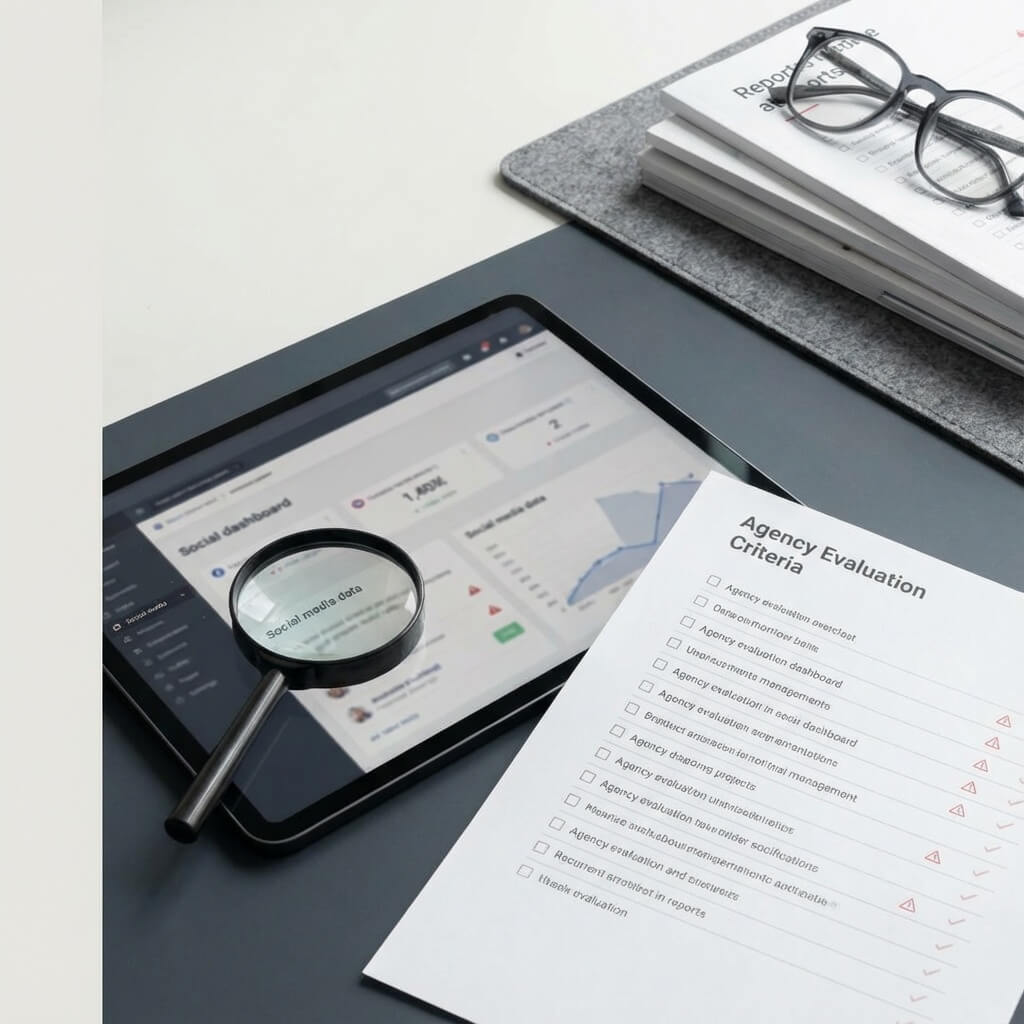
After auditing hundreds of ad accounts over the past decade, we have seen every mistake a Facebook ads agency can make. Accounts that were neglected for months while retainers were collected. Attribution settings manipulated to hide poor performance. Campaign structures that were objectively wrong but went unquestioned because the business owner did not know any better.
We have also seen agencies do exceptional work. Partners who genuinely cared about their clients' success. Teams that brought strategic thinking, creative excellence, and real accountability to every engagement.
The difference between these two experiences often comes down to knowing what to look for before you sign. This guide will share the exact red flags we have learned to spot after a decade of running agencies ourselves, scaling our own brands, and auditing accounts for frustrated business owners.
By the end, you will know how to evaluate any Facebook ads agency and have the questions to ask that separate the exceptional from the mediocre.
These are not minor concerns. These are warning signs that almost always indicate deeper problems. If you see any of these, proceed with extreme caution.
Some agencies insist on creating ad accounts under their own Business Manager. They will frame this as being easier to manage or better for their systems. Do not fall for it.
When an agency owns your ad account, they own your data. They own your pixel history. They own your audience learnings. If you ever leave, you start from scratch. All the money you spent training the algorithm, all the audience data you accumulated, gone.
This is not about convenience. It is about control. Legitimate agencies work within your Business Manager. They should have access to do their job, but you should own the assets.
Ask a simple question: How often will someone log into my ad account? The answer should be daily. If they hesitate, deflect, or talk about weekly check-ins, that tells you everything.
We have audited accounts where the agency logged in twice per month. They duplicated an existing ad, called it a new test, and billed for optimization. The business owner had no idea because they only saw a polished report showing metrics, not actual work.
Good reporting shows what was done, not just what happened. How many new creatives were tested? What changes were made to campaign structure? What hypotheses were tested and what was learned? If their reports only show metrics without context on actions, you are seeing a dashboard, not accountability.
This one is endemic in the agency world. A senior strategist with impressive credentials presents in the pitch meeting. They understand your business, ask smart questions, and seem like exactly the partner you need.
Then you sign, and you never see that person again. Your account is handed to someone with 18 months of experience who is juggling 15 other clients.
Before signing, ask directly: Who will be working on my account day to day? What is their experience level? Can I meet them before we commit?
If they cannot or will not answer these questions clearly, assume the worst.
Case studies that say things like "increased ROAS by 300%" without context are meaningless. 300% of what? Over what time period? What was the starting point?
It is easy to cherry-pick wins. Any agency that has been around long enough has had some accounts perform well. The question is whether they can consistently deliver results across different businesses.
Some agencies require 6-month or 12-month commitments with no out. Their justification is that they need time to see results. There is some truth to this. Paid advertising does take time to optimize.
But if an agency is confident in their work, they should not need to lock you in. The best agencies we know work on shorter terms because they know their results will keep clients around.
If a long-term contract is required, there should be performance clauses. Specific metrics that, if not hit, allow you to exit. Without those, you are taking all the risk while they take none.
Attribution is how success gets measured. It is how you know whether your ads actually drove sales or just took credit for sales that would have happened anyway.
Ask a prospective agency: How do you handle view-through attribution? What is your philosophy on attribution windows? How do you distinguish between real ad-driven conversions and organic conversions that ads took credit for?
If they cannot answer clearly, they either do not understand the fundamentals or they are deliberately keeping things murky so inflated numbers are not questioned.
Good agencies are transparent about attribution limitations. They will tell you when numbers look better than reality. They will push for honest measurement even when it makes their performance look less impressive.
The days of winning on Facebook through clever audience targeting are over. The algorithm is smarter than any human at finding the right people. What it needs from you is creative that converts.
If an agency spends most of their pitch talking about audiences, bidding strategies, and campaign structures but barely mentions creative, they are behind. Modern Facebook advertising success is 80% creative and 20% everything else.
Ask about their creative process. How do they develop concepts? How do they test? How much creative do they produce monthly? If they outsource creative entirely or expect you to provide it, understand that you are only getting part of what you need.
Now that you know what to avoid, here is what separates the exceptional agencies from the rest.
The best agencies do not just ask about your ad spend and goals. They dig into your unit economics. What are your margins? What is your customer lifetime value? What can you actually afford to pay for a customer?
They want to understand your business because they know ads do not exist in a vacuum. A 3x ROAS means nothing if your margins cannot support it. A $50 cost per acquisition is great if your LTV is $500 and terrible if it is $75.
Agencies that ask hard questions are agencies that think like partners, not vendors.
Be wary of agencies that promise everything. The best agencies are specialists who know exactly what they are good at and what falls outside their expertise.
When you ask about a service they do not offer, a great agency will say so directly. They might even recommend someone else who does it better. This honesty is a sign of confidence and integrity.
Agencies that promise to handle everything often deliver mediocrity across the board.
The account manager model creates distance between you and the actual work. You share feedback with an account manager who relays it to a media buyer who may or may not understand the context. Things get lost. Decisions slow down.
The best agency experiences involve direct communication with the person running your ads. You can text them. They respond same-day. When you need to pivot, you pivot immediately.
Not every agency can offer this. But if you can find one that does, the quality of collaboration improves dramatically.
Good agencies can articulate exactly how they approach creative development. They can walk you through their process from concept to production to testing to iteration.
Ask specific questions: How do you develop creative concepts? How many variations do you typically test? What is your process for iterating on winners? How do you use data to inform creative decisions?
If they have clear, thoughtful answers, they have done this enough to have a real methodology. If they give vague responses, creative is probably not a strength.
The best agencies make you smarter about your own business. They explain their reasoning. They teach you how to read the data. They share insights you can use even if you stopped working together.
Some agencies deliberately gatekeep knowledge to create dependency. If you cannot understand what they are doing or why, that might be intentional.
Look for partners who are transparent and generous with knowledge. They should want you to understand because understanding leads to better collaboration.
Use these questions in your evaluation process. The way an agency answers is often as revealing as the answers themselves.
Who specifically will manage my account, and what is their experience? You want names, backgrounds, and years of experience. Vague answers are a red flag.
How often will you log into the ad account? The answer should be daily. Anything less frequent suggests a set-it-and-forget-it approach.
What does your creative production process look like? You want to hear a real methodology, not just "we make ads."
How do you measure success beyond ROAS? Good agencies think about blended CAC, incrementality, new customer acquisition versus returning customers, and other nuanced metrics.
What happens if results are not meeting expectations at 90 days? Listen for accountability versus blame-shifting. Good agencies have a plan for when things are not working.
What is your contract length and cancellation policy? Understand exactly what you are committing to and what options you have if it is not working.
How do you stay current with platform changes? Facebook (and every other ad platform) changes constantly. Good agencies have systems for staying ahead of updates.
Before you commit to an agency, know that there are other options. The traditional agency model is not the only path.
Fractional experts are senior-level advertising professionals who work with a small number of clients. You get direct access to experienced talent without the agency overhead.
In-house hires make sense at higher spend levels, typically $300,000 or more per month. The economics of a full-time salary work better when spread across larger budgets, and the benefits of institutional knowledge compound over time.
Hybrid models combine elements of all three. Some businesses use a fractional expert for strategy and creative direction while an in-house junior handles day-to-day execution. Others use agencies for specific campaigns or channels while keeping core advertising in-house.
The point is that you have more options than the default agency model. Choose based on what your business actually needs, not what feels familiar.
Choosing a Facebook ads agency is not about finding the cheapest option or the biggest name. It is about finding a partner who will genuinely care about your results and has the expertise to deliver them.
Watch for the red flags. Look for the green flags. Ask the hard questions. And trust your gut. If something feels off during the sales process, it will only get worse after you sign.
The best agency relationships are built on transparency, accountability, and genuine partnership. They exist, but they require finding partners who share those values.
If you want a different approach entirely, one where you work directly with top-tier talent without the traditional agency structure, we are happy to talk about how our model works. No pressure. Just an honest conversation about whether we can help.
%20(1).webp)